The sixth annual DFRWS APAC 2026 will be held from October 19 to 22, 2026 in Singapore. The conference will be a hybrid event, running concurrently with attendees participating in satellite sites within APAC. Note, presenters are expected to be on-site (see PRESENTATION DELIVERY MODE).
Conference Location:
Singapore
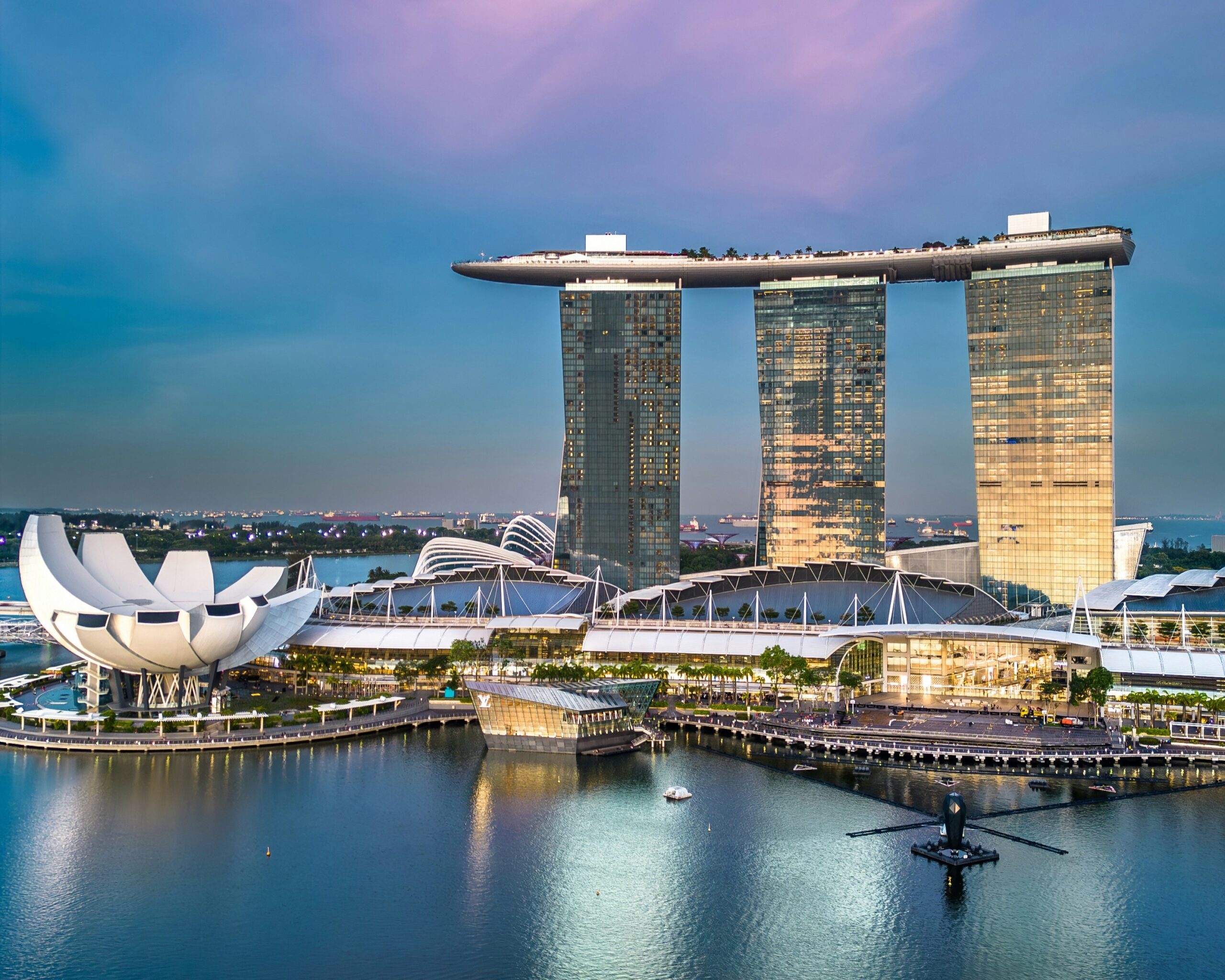
Singapore, a global city-state at the heart of Southeast Asia, is a dynamic hub where a rich tapestry of multicultural heritage coexists with cutting-edge innovation and a world-class skyline. As a leading international center for finance, logistics, and technology, it thrives as a vibrant metropolis that attracts talent and visitors from across the globe. With its lush "City in Nature" landscapes, diverse culinary scene, and seamless blend of East and West, Singapore offers a unique and sophisticated experience, making it a premier global destination.
October 19, 2026 to October 22, 2026
Location
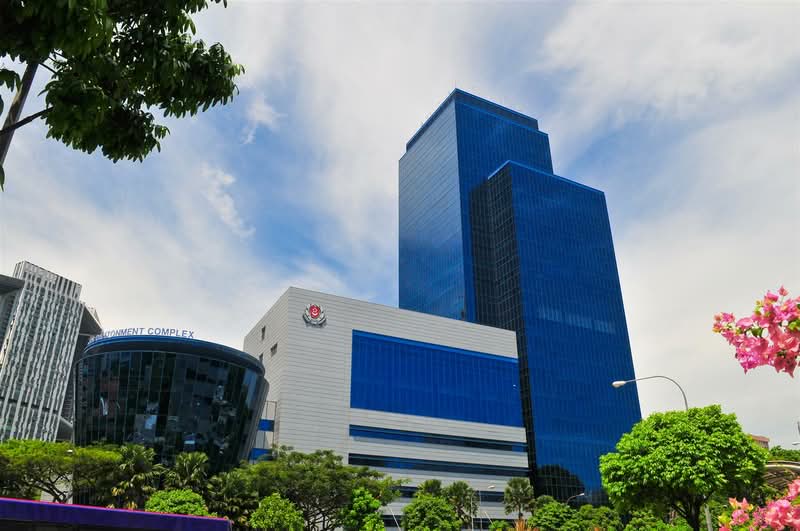
DFRWS APAC 2026 will take place at the Police Cantonment Complex (PCC), a pivotal hub for law enforcement and criminal investigation in Singapore. Situated at the gateway of the historic Chinatown and the bustling Central Business District (CBD), the complex houses key departments of the Singapore Police Force, reflecting the city-state’s commitment to security and technological innovation. With its prime location in the Outram district, the venue offers participants a unique professional atmosphere seamlessly integrated with Singapore’s rich cultural heritage and world-class infrastructure. Its proximity to major transport nodes and vibrant urban centers makes it an ideal setting for fostering international collaboration in the field of digital forensics.
❖ Main Conference- Police Cantonment Complex (PCC), 391 New Bridge Rd, Singapore 088762
Visa & Entry Requirements
Visa & Entry Requirements
Singapore is one of the easiest countries in Asia to visit — most nationalities enter visa-free. Please read this section early, as visa processing and invitation-letter requests take time.
Do I need a visa?
Most delegates do not. Citizens of the large majority of countries — including Australia, Canada, China, the EU/Schengen states, Hong Kong SAR, Indonesia, Japan, Malaysia, New Zealand, the Philippines, South Korea, Taiwan, Thailand, the UK, the USA and Vietnam — may enter Singapore visa-free for short-term visits. Permitted stay is typically 30 or 90 days depending on nationality.
A visa is required if your travel document was issued by one of the following countries or places:
Afghanistan · Algeria · Armenia · Azerbaijan · Bangladesh · Belarus · Democratic People’s Republic of Korea · Egypt · Georgia · India · Iran · Iraq · Jordan · Kazakhstan · Kosovo · Kyrgyzstan · Lebanon · Libya · Mali · Moldova · Morocco · Nigeria · Pakistan · Russia · Somalia · South Sudan · Sudan · Syria · Tajikistan · Tunisia · Turkmenistan · Ukraine · Uzbekistan · Yemen
A visa is also required for holders of a Refugee travel document, an Alien’s passport, a Palestinian Authority passport, a temporary UAE passport, a Hong Kong SAR Document of Identity, a Macao SAR Travel Permit, or a PRC Travel Document.
Note: Always confirm against the official source, which is updated without notice:
www.ica.gov.sg/enter-transit-depart/entering-singapore/visa_requirements
General entry requirements (all travellers)
- Passport validity: at least six months beyond your date of arrival. Airlines enforce this at check-in.
-
SG Arrival Card (SGAC):
most travellers must submit the free SGAC within three days before arrival, including the day of arrival. (ICA exempts transit passengers who do not clear immigration and eligible Singapore residents entering via land checkpoints). It is submitted only at eservices.ica.gov.sg or via the MyICA mobile app.
- Caution: many third-party websites charge a fee to submit the SGAC. They are not affiliated with the Singapore government. Do not use them.
- Biometrics: fingerprint, facial and iris capture at immigration clearance.
- Onward travel: carry proof of onward or return travel and sufficient funds.
- Health: there are currently no COVID-19 entry requirements. The health declaration forms part of the SGAC submission.
- Visit Pass (e-Pass): on arrival you receive an electronic visit pass by email — there is no passport stamp. Check the e-Pass for your permitted length of stay, which is not the same as your visa validity. Provide a valid email address in your SGAC.
If you need a visa
- Apply no earlier than 30 days before your intended arrival date.
- Applications cannot be made at the immigration counter. Apply either online (if you have a Local Contact in Singapore with a Singpass or Corppass account), through an authorised visa agent appointed by a Singapore Overseas Mission, or at your nearest Singapore Overseas Mission.
- Processing times vary considerably by nationality and location. Apply as early as the 30-day window allows.
- A visa is a pre-entry permission, not a guarantee of entry. The immigration officer at the checkpoint grants the visit pass.
Visa-Free Transit Facility (VFTF)
Nationals of the Commonwealth of Independent States, Georgia, India, Turkmenistan and Ukraine — and selected PRC travel-document holders — may be eligible to transit Singapore for under 96 hours without a visa. See the ICA VFTF page for conditions. This is a transit facility and is generally not suitable for conference attendance.
Official links
- ICA entry requirements — ica.gov.sg/enter-transit-depart/entering-singapore
- Visa requirement checker — ica.gov.sg/.../visa_requirements
- SG Arrival Card — eservices.ica.gov.sg
- Singapore Overseas Missions — mfa.gov.sg
Accommodation
Accommodation
The conference has selected the Outram Park area, which sits at the intersection of Chinatown, Tanjong Pagar and Tiong Bahru. Outram Park MRT is an interchange for three lines — East-West, North-East and Thomson-East Coast — so it is well connected to Changi Airport, Marina Bay and Orchard Road.
Closest to Outram Park MRT
| Hotel | Walk to MRT | Indicative rate (SGD/night) |
Notes |
|---|---|---|---|
|
Dorsett Singapore — 333 New Bridge Rd |
Direct — own station exit |
180–280 | Best-connected option; self-service laundry, breakfast |
|
KINN Studios — 69 Keong Saik Rd |
4 min | 160–240 | Small, well-designed boutique rooms on a good restaurant street |
|
Claude Hotel — 12 Teck Lim Rd |
4 min | 170–260 | Quiet boutique, free laundry, compact rooms |
|
KēSa House — 55 Keong Saik Rd |
4 min | 180–280 | Shophouse conversion, shared kitchen, laundry |
|
Butternut Tree Hotel — 22 Teck Lim Rd |
5 min | 90–150 | Budget; very small rooms, some without windows |
|
D’Hotel Singapore — 231 Outram Rd |
8 min | 130–200 | Larger-than-average rooms; Tiong Bahru side, quieter |
Dorsett Singapore has a special rate available for conference participants during the conference period. To access the special rate, please use the promo code DFRWS when making your reservation through the hotel’s booking link.
However, depending on the booking date, it may be cheaper to reserve through the hotel’s official website or other online booking platforms. We recommend comparing prices and choosing the most cost-effective option.
If you would like to book using the special rate provided by the hotel, please click here. Please note that the rates displayed on the booking website are inclusive of service charges and taxes.
Tanjong Pagar side (8–10 minutes’ walk)
| Hotel | Walk to MRT | Indicative rate (SGD/night) |
Notes |
|---|---|---|---|
|
Oasia Hotel Downtown — 100 Peck Seah St |
10 min (2 min to Tanjong Pagar MRT) |
250–380 | Award-winning green façade, rooftop pool, strong business facilities |
|
Amara Singapore — 165 Tanjong Pagar Rd |
9 min | 220–330 | Full-service, large rooms, adjoining shopping arcade |
|
Orchid Hotel — 1 Tras Link |
8 min | 180–280 | Reliable mid-range, well-reviewed breakfast, pool |
|
Sofitel Singapore City Centre — 9 Wallich St |
10 min | 400+ | Premium option; usually above the SGD 400 cap, but worth checking off-peak |
Chinatown / Maxwell side (8–12 minutes’ walk)
| Hotel | Walk to MRT | Indicative rate (SGD/night) |
Notes |
|---|---|---|---|
|
The Scarlet Singapore — 33 Erskine Rd |
8 min | 190–300 | Boutique heritage hotel opposite Maxwell Food Centre; some rooms have no windows |
|
Mercure ICON Singapore City Centre — 8 Club St |
10 min | 200–300 | Above Chinatown MRT, in the Club Street dining district |
|
ST Signature Chinatown — 273A South Bridge Rd |
8 min | 90–160 | Budget capsule-style; automated check-in |
|
Bliss Hotel Singapore — 62 Upper Cross St |
11 min | 130–200 | Simple, clean, opposite Chinatown MRT |
|
Hotel 81 Chinatown — 181 New Bridge Rd |
11 min | 80–140 | Cheapest tier; basic and dated, but central |
Slightly further, still convenient
| Hotel | Nearest MRT | Indicative rate (SGD/night) |
Notes |
|---|---|---|---|
|
Furama City Centre — 60 Eu Tong Sen St |
Chinatown | 160–260 | Large, long-established; executive rooms include lounge access |
|
Park Regis by Prince — 23 Merchant Rd |
Clarke Quay | 180–280 | Pool, good breakfast, near the river |
|
The Clan Hotel — 10 Cross St |
Telok Ayer | 250–380 | Upscale design hotel, rooftop pool, compact rooms |
|
Holiday Inn Express Clarke Quay — 2 Magazine Rd |
Clarke Quay / Fort Canning |
150–230 | Predictable chain standard, breakfast included, no pool |
|
Nostalgia Hotel — 77 Tiong Bahru Rd |
Havelock | 120–190 | Opposite Tiong Bahru Market; small rooms, rooftop pool |
Explore Singapore & Travel Tips
Explore Singapore & Travel Tips
To help you plan your trip and navigate the city, we have put together a practical Singapore City Guide (PDF). It covers everything from airport transfers and public transit to local food recommendations and popular attractions near the venue.
For comprehensive travel information, interactive maps, and event schedules, please visit the official Singapore tourism portal at visitsingapore.com.
Keynotes
From Craft to Court: Unifying OSINT as a Forensically Sound Discipline
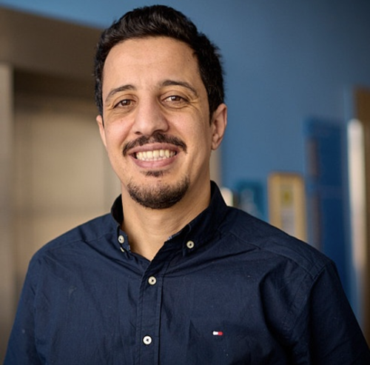
Mohamed Chahine Ghanem | Associate Professor in Cyber Security | Keele University
Open-source intelligence has become indispensable to digital investigations, yet it remains caught between two worlds. In practice, OSINT is too often an artisanal craft, a virtuoso assembly of bespoke tools, undocumented workflows, and individual tradecraft that rarely survives the scrutiny of a courtroom or the reproducibility demands of peer review. Across the research community, methods proliferate in isolation: every team, tool, and tutorial encodes its own assumptions, with little consensus on what makes an OSINT finding sound, repeatable, or admissible. The result is a discipline rich in capability but poor in standardisation, and that gap now constrains both the evidential weight of investigations and the cumulative progress of research.
This keynote argues that OSINT stands at the same inflection point digital forensics faced two decades ago, when ad hoc practice gave way to validated processes, accepted standards, and defensible methodology. Drawing on lessons from established forensic science, it makes the case for unifying OSINT around a shared framework: common terminology, documented and reproducible workflows, explicit provenance and chain-of-custody for open-source data, tool validation, and transparent treatment of uncertainty and error rates. Such a framework does more than satisfy courts, it creates the shared substrate on which researchers and practitioners can finally build together, turning isolated tradecraft into a science whose findings are comparable, contestable, and cumulative.
The talk closes by setting out an agenda for that unification, the methodological, educational, and community-level steps required to move OSINT from craft to court, and by examining what each stakeholder, from individual analysts to academic researchers to standards bodies, stands to gain when investigative practice and scholarship are finally pulling in the same direction.
About Mohamed Chahine Ghanem:
Dr Mohamed Chahine Ghanem is an Associate Professor and Cyber Security Research Lead at Keele University, and a Visiting Associate Professor in Cyber Security and AI within the School of Computer Science and Informatics at the University of Liverpool. He also holds a senior advisory position in Cyber Resilience within the banking sector. Before joining academia, Dr Ghanem gained over 15 years of industry experience in senior roles across law enforcement and multinational organisations, including Global Director of Cyber Security Auditing at Kroll LLC and Nationwide Building Society. He holds an Engineering Degree in Computer Systems, an MSc in Digital Forensics & IT Security, and a PhD in Cyber Security Engineering from City St George, University of London. Dr Ghanem is a Senior Fellow of the HEA (SFHEA), holds an MA in Academic Practice, and has earned numerous professional certifications, including CISSP, CPCI, multiple GIAC and digital forensics certificates. His research focuses on applied AI for cyber security, and he supervises postgraduate researchers in digital forensics, IoT, offensive cyber security, and applied AI. He has published extensively in leading Q1 journals. Dr Ghanem is the Editor-in-Chief of the Journal of Cyber Security and Risk Auditing (Q1), an Editor for ACM Digital Threats: Research and Practice and serves as Guest Editor and Reviewer for leading cybersecurity journals, including IEEE Transactions on Information Forensics and Security (TIFS) and Elsevier Computers & Security.
Case Closed? How Agents will reshape the Future of Digital Forensics
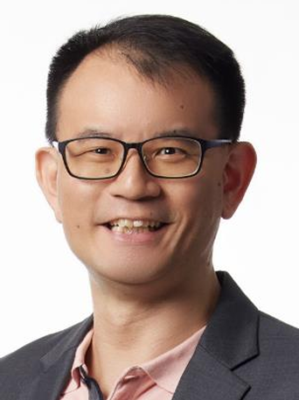
LIM Tuan Liang | Director (Digital & Information Forensics) | Home Team Science & Technology Agency (HTX)
The "Find Evidence" button may soon become a reality for an examiner whereby activating it unleashes a team of AI agents to do the work. Unlike the current use of AI in Digital Forensics where it is treated as passive analytical tools, agents are active participants that can plan investigative approaches, use forensic tools, coordinate with other agents, and adapt its approach as new evidence emerges. This keynote explores where these agents could impact the digital forensic workflow, such as in evidence triage, cross-device correlation, report drafting, and even suggesting new leads. And where agents (or machines in general) genuinely outperform humans to our benefit: tirelessly processing terabytes of data, spotting patterns across disparate evidence sources, and working around the clock without suffering from fatigue or cognitive bias.
Of course, faster does not always mean better. If an AI agent decides which artifacts are relevant and recommends conclusions to a case, who is ultimately accountable? Can the reasoning provided be properly explained in court by the human witness? How do we validate autonomous work at scale, demonstrate repeatability, or be complete in disclosing the parts that are performed by technology capable of making its own decisions? These questions go beyond technology, challenging some of the fundamental principles and assumptions on which digital forensics and legal admissibility are built.
This presentation takes a practical and forward-looking view of what an agent-enabled future might realistically look like over the next few years. Rather than asking whether AI will replace digital forensic examiners, the more relevant question is what the examiner's role becomes when AI agents can handle much of the routine forensic work. "Case Closed?" isn’t meant to invoke the end of human agency, but rather to move the conversation past whether AI will influence digital forensics, towards whether the forensic community is prepared for the future that is being created and how active a part to play in shaping it.
About LIM Tuan Liang:
Tuan Liang joined the Singapore Police Force in 2000 and headed the Technology Crime Forensic Branch in the Criminal Investigation Department from 2010 to 2019. In 2020, he moved to his current position as Director (Digital & Information Forensics) in the Home Team Science & Technology Agency (HTX) under the Ministry of Home Affairs (MHA). He applies an integrated understanding of MHA’s mission to anticipate evolving trends in digital forensics and provides support required across all investigation units. His first computer was an Apple II and his first mobile device was a Nortel M900. He has a lifelong passion for technology and is always happy to do a deep dive.Participation
DFRWS invites contributions in the categories listed below. The submission details are listed below under SUBMISSION INFORMATION.
FULL RESEARCH PAPERS that align with the conference topics will undergo a double-blinded peer review process. Accepted papers will be published in the conference proceedings and can be published for inclusion in a special issue of Forensic Science International: Digital Investigation (Elsevier).
PRACTITIONER PRESENTATIONS & DEMOS require a brief proposal (~500 words; not a full paper) and undergo a light review process to identify content of high interest to DFRWS attendees and to screen out sales-oriented material. Presentations are especially meant for practitioners to share their work. Accepted proposals will be allocated a ~15-minute presentation slot during the conference.
POSTERS provide an opportunity to present ongoing research and discuss preliminary results with the digital forensics community during the conference. Posters may include early findings, research ideas, or a brief demonstration of a prototype. While posters will not be subject to formal peer review and will not be included in the published proceedings, they will be made available on the conference website. Authors will also have the opportunity to present their posters during breaks to engage with attendees and receive feedback from the community. Poster Specifications & Print Guidelines can be found on the website.
Poster Specifications & Print Guidelines
- Poster Dimensions: A1 portrait (594 mm × 841 mm / 23.4″ × 33.1″)
- File Format: .pdf
- Graphic Resolution: Minimum 300 DPI
WORKSHOPS can range from 2 to 4 hours in length (please indicate your preferred duration) and should ideally involve hands-on participation by attendees, enabling an in-depth exploration of tools and techniques relevant to the DFRWS community. Workshops may focus on cutting-edge research projects, practical tips and techniques for widely used tools, or any content that would be of clear benefit to attendees. Proposals based on research previously presented at DFRWS or involving specialized hardware are especially encouraged.
PRESENTATION DELIVERY MODE
All presentations must be delivered in-person from the primary conference venue in Singapore. Delivery remotely may be accepted by the organizing committee in exceptional circumstances, at the discretion of the organizing committee.
SUBMISSION INFORMATION
We ask to submit all contributions via EasyChair (select the appropriate track): https://easychair.org/conferences/?conf=dfrwsapac20260
Please make sure to follow the submission guidelines on the website: https://dfrws.org/submission-criteria/. Organizers may reject work that does not follow the listed criteria or does not fit the scope of the conference.
DEADLINES
All deadlines are at the end of the stated day at 23:59 using the Anywhere on Earth (AOE) convention.
For this event, the submission procedure has changed: We kindly ask to first register and submit the title, abstract, and author information. The full paper is then due later as shown in the DEADLINES section below.
Contact Information
For questions related to participation (e.g., research papers, presentations, etc.), please send an email to: apac-papers (at) dfrws (dot) org
For general questions about DFRWS APAC, please send an email to: apac (at) dfrws (dot) org
Topics of Interest
DFRWS welcomes new perspectives that push the envelope of what is currently possible in digital forensic, and that provide practical solutions for real-world problems.
Potential topics to be addressed by submissions include, but are not limited to:
- AI for digital forensics
- Anti-forensics and anti-anti-forensics
- Case studies and trend reports
- Copyright infringement response
- Cryptocurrency investigation
- Data decoding, deserialization and decryption
- Deleted/Damaged data recovery methods and tools
- Development of digital forensic infrastructures
- Digital evidence sharing and exchange
- Digital forensic preparedness / readiness
- Digital forensic tool validation
- Digital forensics for AI
- Digital forensics in smart cities
- Digital investigation case management
- Event reconstruction methods and tools
- Forensic analysis of anonymous network based activities
- Forensic analysis of cloud and virtualized environments
- Forensic analysis of cloud-based services
- Forensic analysis of databases
- Forensic exploration of newly emerging devices, OSes, apps and services
- Incident response on malware and targeted attacks
- Laws and policies for digital evidence
- Memory acquisition and analysis
- Methodological frameworks for digital forensic activities
- Mobile and embedded device forensics
- Multimedia (image, audio, video) data analysis
- Multi-source data integration and correlation analysis
- Network and distributed system forensics
- Non-traditional forensic scenarios / contexts
- Privacy-preserving forensics
- Special-purpose embedded systems (e.g., vehicles, industrial control systems, medical devices)
- Steganography and steganalysis
- Training and upskilling
- Visualization methods and tools for forensic analysis
Deadlines
| Date | Event |
|---|---|
| April 17, 2026 | Full research papers: Call for papers open |
May 29, 2026 (extended) |
Full research papers: Abstract Submission |
| June 5, 2026 (extended) | Full research papers: Submission update (paper upload) |
| July 10, 2026 | Full research papers: Notification of acceptance |
| July 24, 2026 | Full research papers: Camera Ready Paper Submission and Presenter Registration |
| September 7, 2026 | Workshops, Presentations, Demos (Submissions closed) |
| September 30, 2026 | Posters: Submission (no DOI / abstract publication), Rolling Acceptance until program is full. |
Committees
Organizing Committee
Conference Chair
Parag Rughani (National Forensic Sciences University)
Conference Vice Chair
Zubair Baig (Deakin University)
Emeritus Chair
Bradley Schatz (Apple)
Local Chair
Raymond Chan (Singapore Institute of Technology)
Local Co-Chair
Jason Loh (Singapore Institute of Technology)
Technical Program Chair
Frank Breitinger (University of Augsburg)
Technical Program Co-Chair
Naeem Syed (Deakin University)
Technical Program Vice-Chair
SITI Rahayu (Universiti Teknikal Malaysia Melaka)
Chief Organizational Officer
Daryl Pfeif (Digital Forensics Solutions)
Secretary
Frank Adelstein (NFA Digital, LLC)
Workshop Chair
Jihun Joun (Arizona State University)
Workshop Vice Chair
Bhargav Rathod (Palo Alto Networks)
Demo and Presentation Chair
Akash Thakar (Rashtriya Raksha University)
Demo and Presentation Vice-Chair
Julian Broseus (University of Technology Sydney)
Keynote Chair
Bradley Schatz (Apple)
Keynote Vice Chair
Raymond Chan (Singapore Institute of Technology)
Law Enforcement Training Chair
HTX
Poster Chair
Elenore Ryser (University of Technology Sydney)
Poster Vice Chair
Allan Korol (CrowdStrike)
Rodeo Chair
Soutam Dey (Volvo Group)
Rodeo Co-Chair
Gaurav Gogia (Qualys)
Web Chair
Woosung Yun (Korea University)
Web Co-Chair
Luke Jennings (Flinders University)
Proceeding Chair
Gaurav Gogia (Qualys)
Proceeding Vice Chair
Jieon Kim (Korea University)
Scheduling Chair
Luke Jennings (Flinders University)
Academic Outreach Chair
Jungheum Park (Korea University)
Academic Outreach Chair
Priyanka Singh (University of Queensland)
Virtual Participation / Satelite Site Chair
Asanka Sayakkara (University of Colombo)
Virtual Participation / Satelite Site Co-Chair
Mariya Shafat (University of Kashmir)
Industry Outreach Chair
Dai Shimogaito (Aiforense Japan Data Recovery, inc.)
Technical Program Committee
Frank Breitinger
University of Augsburg
Siti Rahayu
Universiti Teknikal Malaysia Melaka
Naeem Syed
Deakin University - Geelong Waurn Ponds Campus
Mark Scanlon
University College Dublin
Harald Baier
Universität der Bundeswehr München, Research Instiute CODE
Raymond Chan
Singapore Institute of Technology
Luke Jennings
The University of Adelaide
Lojenaa Navanesan
University of Vavuniya
Daryl Pfeif
DFRWS
Weihan Goh
Singapore Institute of Technology
Parag Rughani
National Forensic Sciences University
Min Yu
Institute of Information Engineering, Chinese Academy of Sciences
Sean Mckeown
Edinburgh Napier University
Ricardo J. Rodríguez
Universidad de Zaragoza
Jens-Petter Sandvik
National Criminal Investigation Service, Norway
Wietse Venema
Jungheum Park
Korea University
Janine Schneider
University of Augsburg
Saed Alrabaee
United Arab Emirates University
Jimmy McGibney
South East Technological University
Milan Cermak
Institute of Computer Science, Masaryk University
Taeshik Shon
Ajou univ
Hudan Studiawan
Institut Teknologi Sepuluh Nopember
Kwok-Yan Lam
Nanyang Technological University
Dohyun Kim
National Korea Maritime & Ocean University
Jewan Bang
Hansei University
Atefeh Mohseni Ejiyeh
University of California, Santa Barbara
Patrick De Smet
Nationaal Instituut voor Criminalistiek en Criminologie (NICC/INCC)
Akash Thakar
Rashtriya Raksha University
Richard E Overill
King's College London
Jan-Niclas Hilgert
Fraunhofer
Javier Carrillo-Mondéjar
Universidad de Zaragoza
Changhoon Lee
Seoul National University of Science and Technology
Jihun Joun
Arizona State Univeristy
Rune Nordvik
Norwegian University of Science and Technology
Frank Adelstein
NFA Digital, LLC
Funmilola Fagbola
University of Pretoria, Pretoria, South Africa
Jan Pluskal
Brno University of Technology, Faculty of Information Technology
Christopher Hargreaves
HARGS Solutions Ltd
Jan Gruber
Karlsruhe Institute of Technology
Niken Cahyani
Telkom University
Yash Patel
National Forensic Sciences University
Jungin Lee
Sungkyunkwan University
Wishnu Agung Baroto
DJP
Martin Lambertz
Fraunhofer FKIE
Vladimír Veselý
Brno University of Technology
Sumin Shin
Sungkyunkwan University
Arun Kalackattu Hari
South Australia Police
Bhupendra Singh
Indian Institute of Information Technology Pune
Randi Rizal
Universitas Siliwangi
Nitesh Bharadwaj
National Institute of Technology Raipur
Khushi Gupta
University of North Georgia
Prasad Purnaye
Visvesvaraya PhD Scheme Post Doctoral Fellow (PDF)
Sung Jin Lee
Sungkyunkwan University
Bailey Heading
Matthew Sorell
The University of Adelaide
Seongmin Kim
Sungshin Women's University
Registration
Registration is open! Discounted rates apply for Full Time members of the Law Enforcement community and for Full Time Students only.
Groups of 5 or more and Satellite Site Partners are eligible for Group Discounts please contact APAC-Registration (at) dfrws (dot) org for details.
Register NowIn Person Conference Prices
| Type of Registration | Early Bird Rate | Regular Rate | Last Chance Rate |
|---|---|---|---|
| Available through... | September 7, 2026 | October 6, 2026 | |
| Standard | USD 745 | USD 845 | USD 945 |
| Law Enforcement | USD 645 | USD 745 | USD 845 |
| Student | USD 545 | USD 645 | USD 745 |
| Virtual | USD 75 | USD 100 | USD 150 |
Sponsors
Sponsors help DFRWS to produce quality events and foster community. Click a logo to learn more about the sponsor.
Information about sponsorship opportunities is available at: http://www.dfrws.org/sponsorship-opportunities






Project VIC International
Project VIC International, a US-based technology focused charity, advances and makes available the latest technologies to combat child abuse and child exploitation to law enforcement and non-governmental partners worldwide, enabling rapid identification and rescue of child victims.
Learn MoreMSAB
Looking for the most powerful and reliable mobile forensics solutions? MSAB is the global leader in mobile data extraction and analysis — trusted by law enforcement, military, border control, and intelligence agencies worldwide.
With decades of experience and a sharp focus on mobile forensics since 2003, we offer complete, cutting-edge solutions that help you extract more data, solve more cases, and do it all faster and more efficiently.
From intuitive software to scalable platforms and expert services, MSAB gives you the tools to decentralise operations, reduce backlogs, and take control of your investigations.
Empower your investigations. Turn data into evidence. Get results.
Let’s talk about how we can help you make the world safer.
Magnet Forensics
Magnet Forensics is re-imagining digital investigations with an integrated approach that maximizes people, processes, and technology—providing a wide range of solutions for law enforcement agencies and corporations to meet the challenges of modern digital evidence management.
With solutions designed to be used within labs and within agencies, Magnet Forensics products are designed to not only find the most relevant evidence from mobile devices, computers, IoT devices, and the cloud, but to improve efficiencies within labs and let non-technical stakeholders participate in the analysis of digital evidence. Magnet Forensics has been proud to help examiners and investigators fight crime, protect assets, and guard national security since 2011.
Cellebrite
Cellebrite’s (Nasdaq: CLBT) mission is to enable its customers to protect and save lives, accelerate justice and preserve privacy in communities around the world. We are a global leader in Digital Investigative solutions for the public and private sectors, empowering organizations in mastering the complexities of legally sanctioned digital investigations by streamlining intelligence processes.
Trusted by thousands of leading agencies and companies worldwide, Cellebrite’s Digital Intelligence platform and solutions transform how customers collect, review, analyze and manage data in legally sanctioned investigations. To learn more visit us at www.cellebrite.com, investors.cellebrite.com, or follow us on Twitter at @Cellebrite.
Association of Information Security Professionals (AiSP)
The Association of Information Security Professionals (AiSP) is a non-profit organization committed to advancing the cybersecurity profession in Singapore. AiSP promotes high standards of practice, knowledge sharing, and continuous skills development among information security professionals.
In collaboration with government agencies, industry partners, and academic institutions, AiSP organizes a wide range of events — including conferences, workshops, and special interest groups — to foster community engagement, thought leadership, and professional growth.
Through these initiatives, AiSP plays a key role in strengthening Singapore’s cybersecurity ecosystem and supporting the development of a resilient, competent, and trusted cyber workforce.
Digital Defence Alliance Singapore (DDAS)
The Digital Defence Alliance Singapore (DDAS) is dedicated to strengthening the Digital Defence Pillar of Singapore’s Total Defence strategy. Through organising of Hackathon with MINDEF Nexus and participating in MINDEF Defence Cyber Command (DCCOM) activities and partnering with IMDA Digital for Life Programme and supporting National Youth Council Programme and working with partners across sectors, DDAS empowers Youths, PMEs, Women, and Leaders through advocacy, education, and partnerships. Guided by our vision to be a leading force in Singapore’s Digital Defence — nurturing a trusted, secure, and resilient digital ecosystem where every individual plays a part — DDAS empowers Youths, PMEs, Women, and Leaders with the knowledge, skills, and collaboration opportunities needed to thrive safely and confidently in the digital age.
Learn More