Authors: Dr. Julian Broseus, Dr. Elenore Ryser, Dr. Marie Morelato McNerney
DFRWS APAC 2026
Abstract
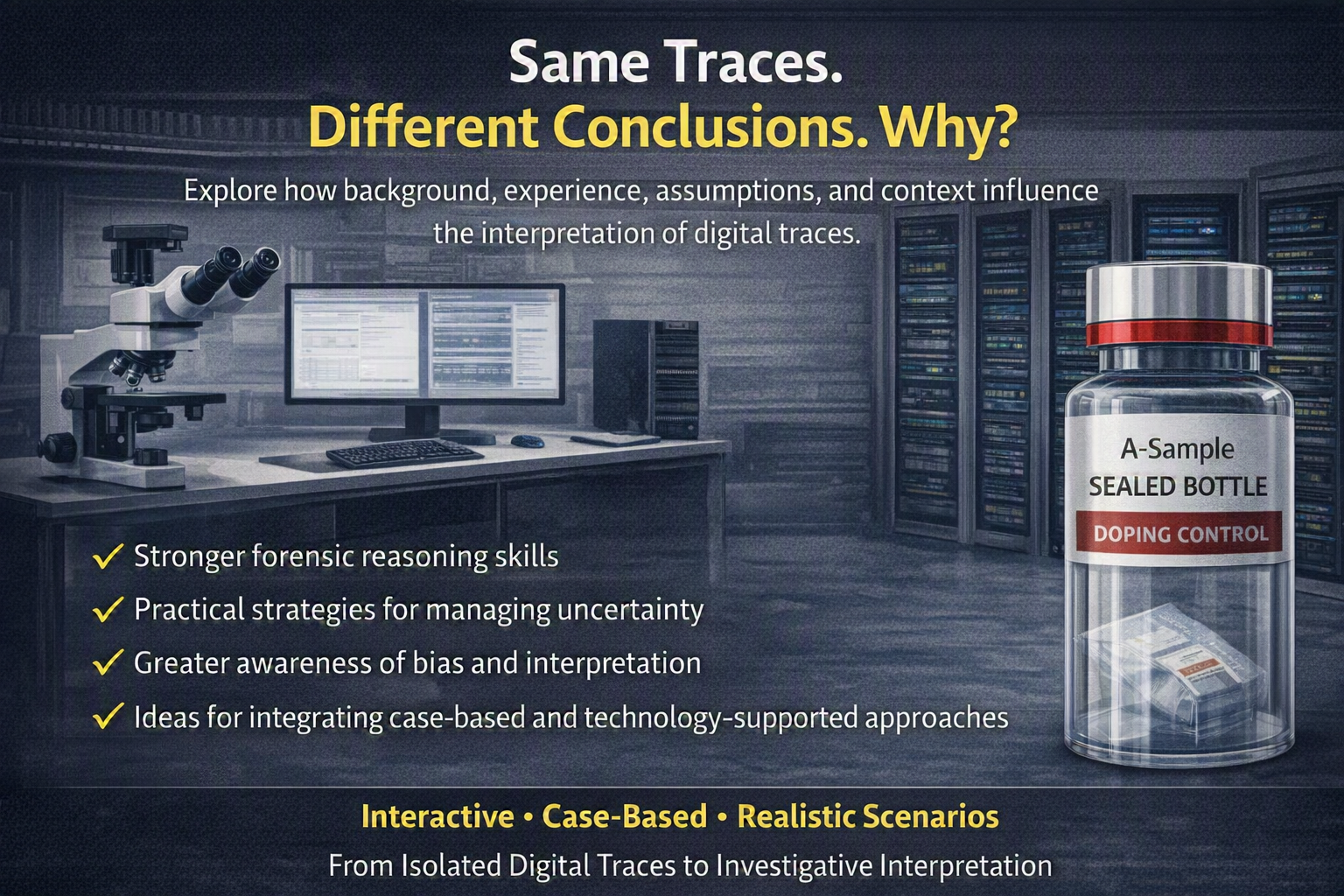
Learning Objectives
Participants will be able to:
- Identify how contextual information – or its absence – shapes interpretation of digital traces.
- Describe how practitioner assumptions and background influence investigative reasoning.
- Apply structured reasoning strategies to incomplete or ambiguous digital datasets.
- Recognize and articulate uncertainties arising from digital trace interpretation.
- Evaluate how interpretative variability can affect investigative and judicial outcomes.
- Evaluate and devise strategies for developing digital forensic expertise through technology-enhanced, case-based, and interactive learning environments.
Target experience level
Intermediate – Participants should have foundational knowledge of digital traces or forensic reasoning, but no advanced technical expertise is required.
Workshop description
Digital forensic investigations frequently rely on fragmented traces that are often examined without complete contextual information. While technical methods for recovering and analysing digital evidence continue to advance, less attention has been given to how investigators interpret those traces, how assumptions and professional backgrounds influence reasoning, and how uncertainty is managed and communicated. This creates the potential for variability in investigative conclusions and highlights the need to better understand the transition from technical analysis to investigative interpretation.
From Isolated Digital Traces to Investigative Interpretation is an interactive workshop that addresses this challenge through realistic, real-world-inspired digital forensic scenarios. Participants will explore how context, practitioner background, assumptions, and reasoning strategies shape the interpretation of incomplete or ambiguous digital evidence and influence investigative outcomes.
The workshop combines applied case-based exercises, progressive disclosure of contextual information, interactive group discussions, and structured reflection on forensic reasoning. Participants will engage with simulated investigative scenarios, analyse digital datasets of increasing complexity, compare alternative interpretations, and discuss the communication of uncertainty in investigative and judicial settings. The session also explores pedagogical approaches for developing digital forensic expertise through technology-enhanced, case-based, and interactive learning environments.
Key activities include virtual scene exploration, pre-scene planning exercises, dataset analysis, interpretation of digital traces, evaluation of competing hypotheses, and facilitated discussions on uncertainty and decision-making. Subject to participant consent, workshop responses may also contribute to the development of a dataset for future research and teaching.
Participants will leave with a deeper understanding of the factors that shape digital trace interpretation, practical strategies for managing uncertainty in forensic investigations, greater awareness of how practitioner perspectives can influence conclusions, and ideas for integrating case-based and technology-supported approaches into digital forensic education, training, and professional practice.
Biography
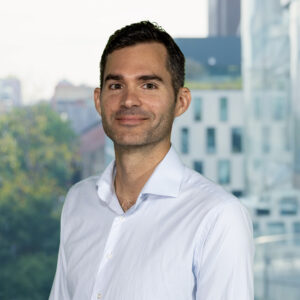 Dr Julian Broséus joined the UTS Centre for Forensic Science in 2025 as Senior Lecturer in Digital Forensic Science following extensive industry experience leading data-driven intelligence programmes and complex international investigations. He completed his PhD at the University of Lausanne (Switzerland), and his work spans forensic intelligence, data analytics, illicit drug markets, and digital forensic case reconstruction, with a particular interest in understanding complex criminal activities through interdisciplinary approaches and the application of emerging technologies to forensic science and investigations. Dr Julian Broséus joined the UTS Centre for Forensic Science in 2025 as Senior Lecturer in Digital Forensic Science following extensive industry experience leading data-driven intelligence programmes and complex international investigations. He completed his PhD at the University of Lausanne (Switzerland), and his work spans forensic intelligence, data analytics, illicit drug markets, and digital forensic case reconstruction, with a particular interest in understanding complex criminal activities through interdisciplinary approaches and the application of emerging technologies to forensic science and investigations. |
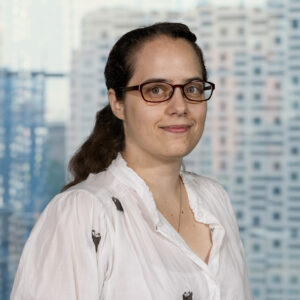 Dr. Elenore Ryser Dr. Elenore RyserAfter completing a Bachelor’s and Master’s degree in Forensic Science at the School of Criminal Justice, University of Lausanne, where she specialised in chemical criminalistics, Elenore pursued a PhD in Digital Forensic Science. Her doctoral research focused on the role of uncertainty throughout the digital forensic process, from initial observations to the final communication of findings. As part of this work, Elenore conducted an ethnographic study within a Swiss police unit to examine investigative practices, which led to a particular interest in the evaluation of geolocation data from mobile devices. Her current research interests include the practical analysis of emerging technologies, the contribution of digital data to criminal investigations, and the development of foundational principles to further establish forensic science as a distinct scientific discipline. In addition to her research and teaching, Elenore is an active member of DFIR Review, a community-led initiative that evaluates and disseminates applied digital forensic research. This work involves reviewing practitioner-led technical blog posts and supporting the community in keeping pace with rapid technological developments |
 Dr. Marie Morelato is a forensic scientist specialising in forensic intelligence and the analysis of illicit drug markets. She completed a Bachelor and Master of Science in Forensic Science at the University of Lausanne and her PhD in Forensic Science at the University of Technology Sydney (UTS) in 2015. Her research focuses on understanding complex criminal and trafficking systems through the integration of diverse data sources, with the aim of supporting intelligence-led approaches to crime and security challenges. She is now a Professor at the University of Lausanne, where she continues to advance research at the intersection of digital forensic science and forensic intelligence. Dr. Marie Morelato is a forensic scientist specialising in forensic intelligence and the analysis of illicit drug markets. She completed a Bachelor and Master of Science in Forensic Science at the University of Lausanne and her PhD in Forensic Science at the University of Technology Sydney (UTS) in 2015. Her research focuses on understanding complex criminal and trafficking systems through the integration of diverse data sources, with the aim of supporting intelligence-led approaches to crime and security challenges. She is now a Professor at the University of Lausanne, where she continues to advance research at the intersection of digital forensic science and forensic intelligence.
|